Thursday, 3 September 2026

Sarah

Farming has a way of teaching you about the things in life that cannot be controlled. You watch animals being born, grow alongside them, care for them through the seasons, and become accustomed to their place in the rhythm of the farm. We raise animals knowing that sometimes they will only spend a year or two with us. It’s not easy, but as seasons come and go, we learn that nothing stays the same forever. Perhaps that is one of the quiet contradictions of farming: we learn to witness and accept the cycle of life, while still allowing ourselves to become deeply attached to the lives that pass through our hands, and our hearts.

For those who have followed us online or have spent time at the farm, there is a good chance you met Sarah. She was born on April 10, 2025, and from the beginning, there was something special about her that was difficult to put into words. She was Molly’s calf, and because she was a heifer, she was the last heifer born from the last cow of my Dad’s herd. Her father was Rex, our favorite bull who we had to part with. That connection alone made her incredibly special to us. From the day she was born, we imagined having her here for the next decade or so, watching her grow into a cow, raise calves of her own, and carrying that connection to my Dad’s herd forward.

But Sarah was special for reasons that went far beyond where she came from. She had a personality unlike any animal we have known. There was a gentleness about her, but also an unmistakable joy in being alive. She trusted us completely and enjoyed our company. There was something almost peaceful in the way she would be around us, as though she had never learned to be afraid of the world. She seemed to simply accept people, accept life, and find something good in every moment.

It is difficult to explain how an animal can become so deeply woven into your heart and into the fabric of a farm. Sarah somehow did. She became more than a heifer we cared for. She became a living connection to where our farm had come from, and a part of what we imagined its future would look like. There was something about her that felt almost like a window into what a completely trusting, joyful spirit could look like, and we were incredibly fortunate to have known her.


Sadly, we suddenly and unexpectedly lost Sarah back in July, along with her pasture partner, Lois, who was about the same age. The two heifers were in a separate pasture from the herd because they were too young to breed and needed a few months to grow before being put in the same pasture as the bull. Although they were days away from being moved in with the herd, they found an old tractor battery that had been buried decades ago, and were exposed to enough lead to poison them. They died very suddenly and quickly from lead poisoning, although we and the emergency vet didn’t know what was happening at the time. It took time for lab tests to confirm their cause of death, and then more time for us to find (and clean up) the source. The experience of having to see them pass away at a young age, while doing everything we could to try to save them, was a terrible loss.

The financial loss for our small farm has also been significant. Each heifer represented over a year of care, hay, pasture grass, and daily work. It would cost us roughly $8000 to buy two heifers their age in order to expand our herd of breeding cows like we had planned. We also ended up with a large veterinary bill for the emergency services and lab testing that was required to actually determine their cause of death. That testing allowed us to search for a source of lead and then find the battery and clean it up so other animals would not be harmed.

The circumstances of their deaths make the loss even harder to accept. Lead poisoning is a particularly devastating way to lose an animal because there is really nothing that can be done once excessive exposure has occurred. It was very disturbing to watch them die from poisoning. These were young, healthy heifers that had been growing normally and were only days away from being moved into the main herd, away from the thing that caused their death. There was no indication that anything was wrong with them until it was too late. What began as an ordinary day on the farm suddenly became a nightmare of a day where we were fighting to understand what was happening and working with the responding emergency veterinarian trying to save two animals that we had cared for since they were born.

There is also something especially difficult about knowing that their deaths were caused by something that had been hidden on the property for decades. An old tractor battery, buried long before we could have known it was there, ultimately became the cause of their death. They were simply doing what cattle naturally do: exploring their pasture and forest grazing, with no way for us to know that a dangerous object was hidden beneath the ground like a ticking time bomb. We had taken every reasonable step to provide them with a safe pasture, and yet something completely outside our knowledge and control resulted in their deaths. If only we had known the battery was there.  

We have lost calves and older cattle over the years when Dad was working the farm, as I (Dave) was growing up and even since managing the farm. This is part of farming, and although the loss of each animal makes us lose a piece of ourselves, this was much different. There are some losses you expect will hurt, and then there are losses that reach somewhere inside you that you didn't even know existed. Although Lois was shy and more nervous, we’d spent a lot of time with her this spring, so she warmed up to us and gained our trust. Sarah was different though. She had such a personality. She had a way about her. She was one of those animals that seemed to have a joy of existing and a mutual love of us. Over time, both Sarah and Lois became part of the daily rhythm of the farm. When we lost Sarah and Lois, something in us broke. Farming teaches you that loss is part of the life we've chosen. But this was different. We weren't prepared for the depth of grief we experienced after their death.

We found ourselves grieving the loss of these animals in a way we had never experienced before. It wasn't simply sadness. It was the strange emptiness that comes when something that has been part of your everyday life, and a beacon of happiness, suddenly isn't there anymore. Sarah had become special to both of us. Christina loved her too, and we shared the sadness of looking out across the empty pasture for the last couple months and knowing they weren’t there anymore.


In a bit of good news which we haven’t shared, because we couldn’t bring ourselves to share the bad news before this, Molly actually gave birth to a calf on August 8, 2026, when we weren’t sure that she was pregnant. He is a healthy bull calf and looks just like Sarah and Molly, as you can see from the picture below, from the day he was born.


Although this is a happy experience, we are still thinking of Sarah (and Lois) and what life would be like with her here and now we prepare for the next loss of moving Molly herself, who has been showing her age and is nearing the end of her life. When animals pass away, the farm work and growth continue, but we don't always move forward quite as quickly.

Sunday, 28 December 2025

Rex - The life of a bull

Growing up on a cattle farm, we saw lots of bulls come and go. Their job was to breed the cattle, and the calves born would be sold as other breeder cows (females) and beef (steers). That's the basic setup for a cow/calf farm operation and one we are both aware of as we started working the farm with my (Dave's) Dad. 

As we worked with Dad, we saw how connected he was to the cattle, and when they may have passed away or needed to be sold, he took it hard. In our early days on the far,m we didn't fully understand the emotional connection but as the years passed, we understood. A perfect example of this is our recent change to the farm with our bull, Rex, going to market after discovering he is unable to breed anymore. 

Rex was our breeder bull and was born on March 6th, 2020. He was the first bull in a long time, born on the farm to be raised as a bull. His mother was "Bessie" a black Angus, which was the first cow Christina and I bought together, and his father was a red Angus dad and I bought together. Since he was born during COVID lockdown, we had ample time to spend with him, and we used to walk him on a lead around the farm.


This early connection and the deeper connection from his father and mother, to the farm, made Rex a part of the family. His name (Rex) was given as a connection to Dave's grandfather who farmed cattle most of his life and because he would have loved to see the bull we were raising. 

During his 6 years on the farm, his main job was to breed our cattle and give us a great crop of calves every year. He was also the highlight of the farm for guests and was a bit of a celebrity. We featured him on our webite and shared a lot on social media of his unique personality. He was on a CBC national story on farming and was usually in any articles about the farm like this one in the South Shore Breaker. 


Farmstay guests also experienced Rex as he was a regular part of all the farm tours we did with guests. He always loved a petting, and folks always were amazed at his 2100lb size but being so tame and friendly which is a big goal in general for us. We want more and more people to be connected to local farms and learn about animals and agriculture and Rex made that happen for so many people from literally around the world.


Rex was in so many pictures as well over the years that I'm sure any visitor to the farm has a picture of him on their camera roll. One of my favorite pictures of him was taken by Cassidy Smith who is a regular photographer on the farm. She snapped this one of me hugging and scatching him and this couldn't be more reflective of his kind personality and trust of those around him.


Losing Rex a few weeks ago now, was one of the hardest days of farming for us. We also had to move out "Christina" the cow as well which made it extra hard but Rex was as close to a child to us as any other farm animal. He was a kind soul that loved the life he had here (as you can see in his eyes below) and we were so happy to have experienced his life with him. Being able to share him with so many other people over the years was also a blessing. We miss him but are thankful for the full 6 years we had him.


Monday, 10 November 2025

Summer Drought

 It's been a while since writing one of these, but we have been extra busy this summer, specifically because of the weather. 

The year started our very well in terms of conditions for the gardens and pasture. We got fertilizer on early, had a good balance of moisture and sun, plus the hay fields had a good early growth to allow us to start haying 2 weeks before we normally do. We also were opening our farmstand on weekends for most of the year which was another busy part of the year but very rewarding!

Christina and I started to get worried near the end of June when we saw the long range forecast show no rain coming over 14 days. Because her garden and dahlia's need regular moisture, we decided to invest in a gas water pump with hoses and use the existing 1000 litre tote 


Although this meant we got water to the gardens (and eventually the cows), it meant we were pumping 1000 liters of water nearly every day from around the middle of July, until early November. This took up much more of our available time over the year, so although we were done haying by the 3rd week of July (much earlier than any other year), our time got spent hauling water.

The other major issue this year was with the pastures and hay fields. They couldn't be watered the same as the garden because of their size and we aren't set up to irrigate that amount of land. This meant that by early August, much of our pastures looked like the picture above. With no grass growing, and no sign of any second cut hay to make, we invested early in round rolls to feed out to the cattle from around the end of July until they go in the barn in late November. This was a cost we didn't expect and many farmers faced the same issue. Thankfully we were able to make enough hay for the winter but we couldn't feed it out in the summer. 


Water for the cattle became another issue early on. Although we have two drilled wells on the farm, they have to keep water going for our house and the farmhouse plus they provide water for the cows. As we saw dryer conditions, we decided to balance out the well water use with a full tote of water they could drink from. Although we may have been ok to just use the well, this at least took pressure off the well pump.

Although the weather made it busy and stressful year, we did have some summer highlights! Christina finally was able to attend the Windsor Garlic Festival and it was a huge success, with her selling out of garlic in 2 hours! This has motivated her to expand her garlic patch so she has more garlic next year. 

As we wind down the fall season and have Christmas Tree U-pick and cattle going in the barn for the winter in our sights, our plan is to rest this winter and recover from the busy dry seasons.


Saturday, 15 February 2025

Winter Sowing

 Have you heard of it? It’s an old practice that seems to have gotten more popular the last few years with people sharing their process on social media. It’s a cheap, easy, way to grow plants from seed. You don’t need very much for supplies to give this technique a try.

Some types of seeds require stratification (exposing seeds to cold/moist conditions) for germination. Many perennials, flowers (like poppy), nut seeds, cold hardy vegetables (onions, kale, some greens) benefit from stratification and perform well with winter sowing. Even after repeat freezing and thawing, they know when it’s time to “wake up” and start growing. This technique doesn’t work well for all types of seeds though. Heat-loving crops like peppers and tomatoes do not work as well for this process because they’re super slow to germinate and then slow growing, and they would suffer from cold temperatures and frosts. The cold hardy seeds won’t mind those same cold and frosty conditions.

Of course, winter sowing also includes directly sowing seeds in the outdoor garden, but to keep a closer eye on them and keep them sorted from the weeds also germinating in the spring, plastic containers (4 L water jug split open around the middle, big plastic lettuce clam-shell etc.) are a popular choice for winter sowing containers. Whatever you choose for a container, it needs drainage and air flow, so poke holes in the bottom of the plastic container before filling with moist seed starting soil. Scatter seeds on top of the soil and then cover them with some more soil. Close the containers back up, and place them outside while it’s still cold.

Winter Sowing is done during the cold winter months (December to March here). I usually start seeds by winter sowing in February when it’s still too early to start most seeds indoors, but I’m getting the itch to start gardening. I use plastic water jugs. I tape them back up where I’ve split them open to plant and keep the lid on them until the seeds start to germinate. I tuck the just in a protected (but sunny) corner beside the chicken house where they won’t blow away and keep peaking once the weather starts to warm up. Once they start growing, I open up the taped section or take off the lid to allow for better airflow and keep them from getting too warm.

Here are a few photos of my winter sowing containers and seedlings from the past couple winters.


Monday, 6 January 2025

Beef Sales at Bar M Ranch

It's that time of year again when we’re selling beef from the farm! This year, we’ve received many questions about the process, so we wanted to share how it works to get our beef boxes to you and what it takes to put them together.

The process begins with raising an Angus steer, which takes about 20–24 months. This means we care for them for nearly two years before they are ready for market. Our steers and cows graze on grass during the warmer months and eat hay while in the barn during the colder months. This makes grass the primary component of their diet, so our cattle are grass-fed.

As a farm selling meat to the public, we’re required to process our steers at a licensed facility. There are only a few in the province, and we’ve been working with a great one in Bridgetown for several years now. However, due to the limited number of facilities, we need to book months in advance. For example, to process steers on January 9, we had to make the reservation back in early October. This requires some thought in advance since we have to hope the steers will be healthy and ready to go on that day. Additionally, we only book processing in the winter since we don’t have a refrigerated truck for transport—cooler outdoor temperatures naturally help keep the meat cold during delivery.


As the market date approaches, the planning intensifies. Here are some key factors we consider before advertising meat for sale:

  • Amount of Meat: When we bring cattle to the abattoir, we know their live weight, but we won’t know the finished weight (the total weight of all the cuts) until after processing. This means our advertised availability is an estimate based on previous years’ finished weights.

  • Pick-Up Date: We typically have a good idea of when the meat will be ready, but this depends on the butcher’s freezer space. Sometimes we’re asked to pick it up early. This is why we collect customer contact information to keep everyone informed. We’re often asked why we can’t hold or save meat for another day, and the main reason is limited freezer space. As a small farm processing only a few cows every few years, we don’t generate enough revenue to invest in larger freezers.

  • Buyer List: Selling our beef is one of the most exciting parts of the process, especially since many of our customers return year after year! However, it’s also the most challenging. We don’t know the exact amount of meat available until the day of pick-up, nor do we have a confirmed pick-up date until closer to the time. Since freezer space is limited, we can only hold meat on the day of delivery. To streamline the process, we started using an online order form this year. It’s been the most efficient way to track orders and ensure everyone gets what they need.

At the heart of it all, we truly love raising the beef we sell. It’s a privilege to provide high-quality, grass-fed beef to our community, and we take pride in the care and effort we put into every step of the process. However, as a small farm, there are unique challenges we face. The limited number of licensed processing facilities, the need to plan months in advance, and the lack of large-scale storage space make distribution particularly challenging.

The way we organize our process—from careful scheduling and estimating availability to using an online order form—has been shaped by these realities. It allows us to manage the complexities of getting our beef from the farm to your table while ensuring we uphold the quality and transparency our customers value. We’re grateful for your support and understanding as we navigate these challenges and continue doing what we love.


Friday, 3 January 2025

Winter Rest and Reflections

 As we settle into winter after the holiday season, we do so with a focus on rest and reflection. Rest from the past year of an amazing year of hosting farm guests for the farmstay and events at the pavilion. Reflection on who we've met and how they have experienced the farm has been brings back warm memories during this cooler season. 


2024 was the second full year renting out the farmhouse and was much busier than 2023. We didn't list on Airbnb our first year and stuck to mostly weekend rentals. This gave us time to learn and grow from our guests and when we finally listed we were ready. From May until late November this year, we ended up being booked for weekends and weekdays which was busy but so much fun meeting guests from all over the world (we met people from Germany to Texas and even Peru!).

We had our first wedding here this year which was a big step for us! We had been asked over the years, after we put up the pavilion if we would ever host weddings but without a place to stay for the wedding party, it made it not ideal. With the farmhouse we now have a great place to stay and get married under the pavilion! Even the cattle were into it as "Rex" the bull watched the cars parking and bride get her pictures done. 


Christina had a great dahlia garden this year which was a welcome change from garden she had to work with during 2023, when we were getting too much rain. Not only was it an amazing backdrop for the wedding but we also had lots of folks purchase bouquets to enjoy. Reflecting back on the the colors of her dahlia's is a welcome reminder that spring won't be far away for more color on the farm other than white snow.

Winter will be a time for rest but also a time to plan but we can't wait to meet more guests, enjoy more events and work the farm chores in 2025!

Tuesday, 8 October 2024

Farm Updates - Summer/Fall 2024

It has been awhile since we did a blog post so this is going to feel like a seasonal newsletter. We have been extra busy on the farm so instead of trying to share all that's been happening, we'll share some of the highlights. 

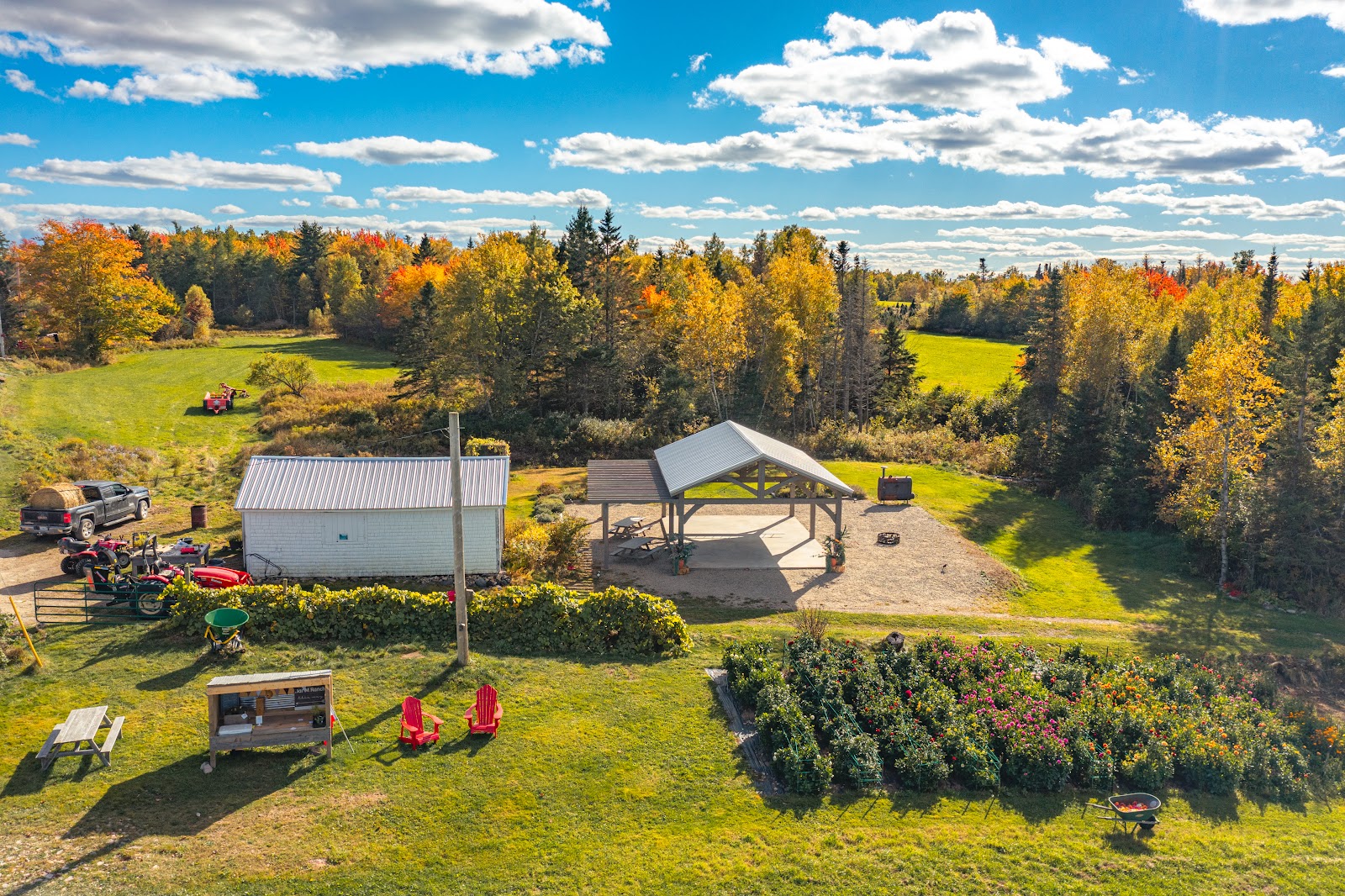
We finally have a farmstand on the farm! We used reclaimed wood and my (Dave's) extensive carpentry skills, we finally have a space for folks to pick up our farm goods. We have been selling garlic and dahlia bouquets but this fall we'll have Christmas wreathes for sale as well. We can't wait to expand this next year. 

We had our first wedding on the farm! We had been thinking about offering the space here on the farm for weddings and we finally went for it! It was a lovely event and we're so excited to offer the space for it going forward. Stay tuned for more details.

Christina's dahlia patch was amazing this year and we're so happy for that! After last year and all the wet weather we had, we were so thankful for an amazing year for her dahlia's. 


The cattle have been amazing this year. We have been building the herd back after dad got out of farming and this year was the peak since that time. Our bull is at his peak as her turns 5 years old and all the cows are healthy and doing well during calving season. 


We have had less workshops this year but the ones we have had were very memorable. One of our regular farmstay guests had a birthday party on the farm and it was so much fun. We love doing these events where kids get to experience the outdoors and nature and this was an amazing time for that. 

Overall we have had an amazing summer and are having some awesome experiences going into the fall.


Sarah

Farming has a way of teaching you about the things in life that cannot be controlled. You watch animals being born, grow alongside them, car...