Sunday, 28 December 2025

Rex - The life of a bull

Growing up on a cattle farm, we saw lots of bulls come and go. Their job was to breed the cattle, and the calves born would be sold as other breeder cows (females) and beef (steers). That's the basic setup for a cow/calf farm operation and one we are both aware of as we started working the farm with my (Dave's) Dad. 

As we worked with Dad, we saw how connected he was to the cattle, and when they may have passed away or needed to be sold, he took it hard. In our early days on the far,m we didn't fully understand the emotional connection but as the years passed, we understood. A perfect example of this is our recent change to the farm with our bull, Rex, going to market after discovering he is unable to breed anymore. 

Rex was our breeder bull and was born on March 6th, 2020. He was the first bull in a long time, born on the farm to be raised as a bull. His mother was "Bessie" a black Angus, which was the first cow Christina and I bought together, and his father was a red Angus dad and I bought together. Since he was born during COVID lockdown, we had ample time to spend with him, and we used to walk him on a lead around the farm.


This early connection and the deeper connection from his father and mother, to the farm, made Rex a part of the family. His name (Rex) was given as a connection to Dave's grandfather who farmed cattle most of his life and because he would have loved to see the bull we were raising. 

During his 6 years on the farm, his main job was to breed our cattle and give us a great crop of calves every year. He was also the highlight of the farm for guests and was a bit of a celebrity. We featured him on our webite and shared a lot on social media of his unique personality. He was on a CBC national story on farming and was usually in any articles about the farm like this one in the South Shore Breaker. 


Farmstay guests also experienced Rex as he was a regular part of all the farm tours we did with guests. He always loved a petting, and folks always were amazed at his 2100lb size but being so tame and friendly which is a big goal in general for us. We want more and more people to be connected to local farms and learn about animals and agriculture and Rex made that happen for so many people from literally around the world.


Rex was in so many pictures as well over the years that I'm sure any visitor to the farm has a picture of him on their camera roll. One of my favorite pictures of him was taken by Cassidy Smith who is a regular photographer on the farm. She snapped this one of me hugging and scatching him and this couldn't be more reflective of his kind personality and trust of those around him.


Losing Rex a few weeks ago now, was one of the hardest days of farming for us. We also had to move out "Christina" the cow as well which made it extra hard but Rex was as close to a child to us as any other farm animal. He was a kind soul that loved the life he had here (as you can see in his eyes below) and we were so happy to have experienced his life with him. Being able to share him with so many other people over the years was also a blessing. We miss him but are thankful for the full 6 years we had him.


Monday, 10 November 2025

Summer Drought

 It's been a while since writing one of these, but we have been extra busy this summer, specifically because of the weather. 

The year started our very well in terms of conditions for the gardens and pasture. We got fertilizer on early, had a good balance of moisture and sun, plus the hay fields had a good early growth to allow us to start haying 2 weeks before we normally do. We also were opening our farmstand on weekends for most of the year which was another busy part of the year but very rewarding!

Christina and I started to get worried near the end of June when we saw the long range forecast show no rain coming over 14 days. Because her garden and dahlia's need regular moisture, we decided to invest in a gas water pump with hoses and use the existing 1000 litre tote 


Although this meant we got water to the gardens (and eventually the cows), it meant we were pumping 1000 liters of water nearly every day from around the middle of July, until early November. This took up much more of our available time over the year, so although we were done haying by the 3rd week of July (much earlier than any other year), our time got spent hauling water.

The other major issue this year was with the pastures and hay fields. They couldn't be watered the same as the garden because of their size and we aren't set up to irrigate that amount of land. This meant that by early August, much of our pastures looked like the picture above. With no grass growing, and no sign of any second cut hay to make, we invested early in round rolls to feed out to the cattle from around the end of July until they go in the barn in late November. This was a cost we didn't expect and many farmers faced the same issue. Thankfully we were able to make enough hay for the winter but we couldn't feed it out in the summer. 


Water for the cattle became another issue early on. Although we have two drilled wells on the farm, they have to keep water going for our house and the farmhouse plus they provide water for the cows. As we saw dryer conditions, we decided to balance out the well water use with a full tote of water they could drink from. Although we may have been ok to just use the well, this at least took pressure off the well pump.

Although the weather made it busy and stressful year, we did have some summer highlights! Christina finally was able to attend the Windsor Garlic Festival and it was a huge success, with her selling out of garlic in 2 hours! This has motivated her to expand her garlic patch so she has more garlic next year. 

As we wind down the fall season and have Christmas Tree U-pick and cattle going in the barn for the winter in our sights, our plan is to rest this winter and recover from the busy dry seasons.


Saturday, 15 February 2025

Winter Sowing

 Have you heard of it? It’s an old practice that seems to have gotten more popular the last few years with people sharing their process on social media. It’s a cheap, easy, way to grow plants from seed. You don’t need very much for supplies to give this technique a try.

Some types of seeds require stratification (exposing seeds to cold/moist conditions) for germination. Many perennials, flowers (like poppy), nut seeds, cold hardy vegetables (onions, kale, some greens) benefit from stratification and perform well with winter sowing. Even after repeat freezing and thawing, they know when it’s time to “wake up” and start growing. This technique doesn’t work well for all types of seeds though. Heat-loving crops like peppers and tomatoes do not work as well for this process because they’re super slow to germinate and then slow growing, and they would suffer from cold temperatures and frosts. The cold hardy seeds won’t mind those same cold and frosty conditions.

Of course, winter sowing also includes directly sowing seeds in the outdoor garden, but to keep a closer eye on them and keep them sorted from the weeds also germinating in the spring, plastic containers (4 L water jug split open around the middle, big plastic lettuce clam-shell etc.) are a popular choice for winter sowing containers. Whatever you choose for a container, it needs drainage and air flow, so poke holes in the bottom of the plastic container before filling with moist seed starting soil. Scatter seeds on top of the soil and then cover them with some more soil. Close the containers back up, and place them outside while it’s still cold.

Winter Sowing is done during the cold winter months (December to March here). I usually start seeds by winter sowing in February when it’s still too early to start most seeds indoors, but I’m getting the itch to start gardening. I use plastic water jugs. I tape them back up where I’ve split them open to plant and keep the lid on them until the seeds start to germinate. I tuck the just in a protected (but sunny) corner beside the chicken house where they won’t blow away and keep peaking once the weather starts to warm up. Once they start growing, I open up the taped section or take off the lid to allow for better airflow and keep them from getting too warm.

Here are a few photos of my winter sowing containers and seedlings from the past couple winters.


Monday, 6 January 2025

Beef Sales at Bar M Ranch

It's that time of year again when we’re selling beef from the farm! This year, we’ve received many questions about the process, so we wanted to share how it works to get our beef boxes to you and what it takes to put them together.

The process begins with raising an Angus steer, which takes about 20–24 months. This means we care for them for nearly two years before they are ready for market. Our steers and cows graze on grass during the warmer months and eat hay while in the barn during the colder months. This makes grass the primary component of their diet, so our cattle are grass-fed.

As a farm selling meat to the public, we’re required to process our steers at a licensed facility. There are only a few in the province, and we’ve been working with a great one in Bridgetown for several years now. However, due to the limited number of facilities, we need to book months in advance. For example, to process steers on January 9, we had to make the reservation back in early October. This requires some thought in advance since we have to hope the steers will be healthy and ready to go on that day. Additionally, we only book processing in the winter since we don’t have a refrigerated truck for transport—cooler outdoor temperatures naturally help keep the meat cold during delivery.


As the market date approaches, the planning intensifies. Here are some key factors we consider before advertising meat for sale:

  • Amount of Meat: When we bring cattle to the abattoir, we know their live weight, but we won’t know the finished weight (the total weight of all the cuts) until after processing. This means our advertised availability is an estimate based on previous years’ finished weights.

  • Pick-Up Date: We typically have a good idea of when the meat will be ready, but this depends on the butcher’s freezer space. Sometimes we’re asked to pick it up early. This is why we collect customer contact information to keep everyone informed. We’re often asked why we can’t hold or save meat for another day, and the main reason is limited freezer space. As a small farm processing only a few cows every few years, we don’t generate enough revenue to invest in larger freezers.

  • Buyer List: Selling our beef is one of the most exciting parts of the process, especially since many of our customers return year after year! However, it’s also the most challenging. We don’t know the exact amount of meat available until the day of pick-up, nor do we have a confirmed pick-up date until closer to the time. Since freezer space is limited, we can only hold meat on the day of delivery. To streamline the process, we started using an online order form this year. It’s been the most efficient way to track orders and ensure everyone gets what they need.

At the heart of it all, we truly love raising the beef we sell. It’s a privilege to provide high-quality, grass-fed beef to our community, and we take pride in the care and effort we put into every step of the process. However, as a small farm, there are unique challenges we face. The limited number of licensed processing facilities, the need to plan months in advance, and the lack of large-scale storage space make distribution particularly challenging.

The way we organize our process—from careful scheduling and estimating availability to using an online order form—has been shaped by these realities. It allows us to manage the complexities of getting our beef from the farm to your table while ensuring we uphold the quality and transparency our customers value. We’re grateful for your support and understanding as we navigate these challenges and continue doing what we love.


Friday, 3 January 2025

Winter Rest and Reflections

 As we settle into winter after the holiday season, we do so with a focus on rest and reflection. Rest from the past year of an amazing year of hosting farm guests for the farmstay and events at the pavilion. Reflection on who we've met and how they have experienced the farm has been brings back warm memories during this cooler season. 


2024 was the second full year renting out the farmhouse and was much busier than 2023. We didn't list on Airbnb our first year and stuck to mostly weekend rentals. This gave us time to learn and grow from our guests and when we finally listed we were ready. From May until late November this year, we ended up being booked for weekends and weekdays which was busy but so much fun meeting guests from all over the world (we met people from Germany to Texas and even Peru!).

We had our first wedding here this year which was a big step for us! We had been asked over the years, after we put up the pavilion if we would ever host weddings but without a place to stay for the wedding party, it made it not ideal. With the farmhouse we now have a great place to stay and get married under the pavilion! Even the cattle were into it as "Rex" the bull watched the cars parking and bride get her pictures done. 


Christina had a great dahlia garden this year which was a welcome change from garden she had to work with during 2023, when we were getting too much rain. Not only was it an amazing backdrop for the wedding but we also had lots of folks purchase bouquets to enjoy. Reflecting back on the the colors of her dahlia's is a welcome reminder that spring won't be far away for more color on the farm other than white snow.

Winter will be a time for rest but also a time to plan but we can't wait to meet more guests, enjoy more events and work the farm chores in 2025!

Tuesday, 8 October 2024

Farm Updates - Summer/Fall 2024

It has been awhile since we did a blog post so this is going to feel like a seasonal newsletter. We have been extra busy on the farm so instead of trying to share all that's been happening, we'll share some of the highlights. 

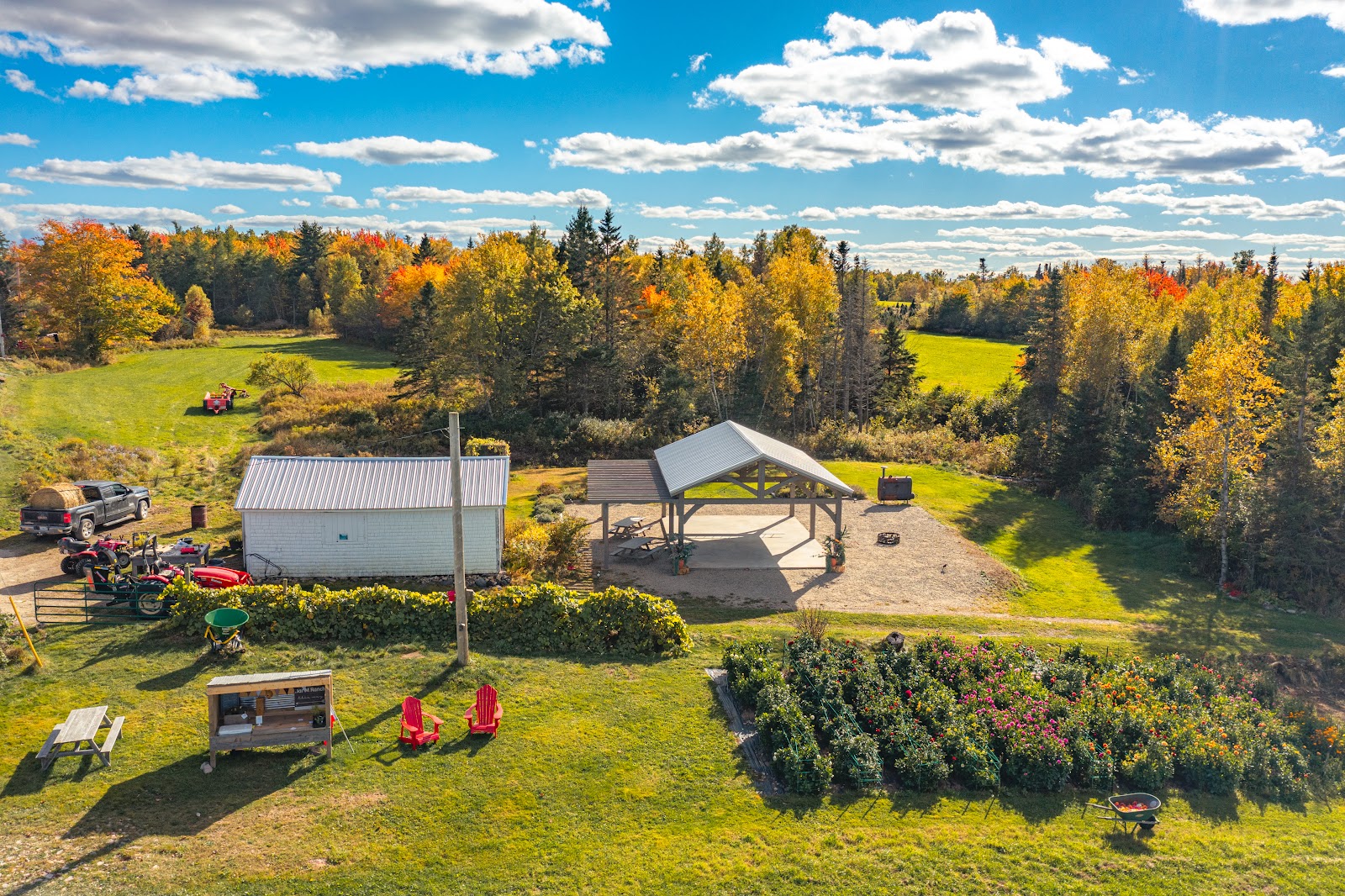
We finally have a farmstand on the farm! We used reclaimed wood and my (Dave's) extensive carpentry skills, we finally have a space for folks to pick up our farm goods. We have been selling garlic and dahlia bouquets but this fall we'll have Christmas wreathes for sale as well. We can't wait to expand this next year. 

We had our first wedding on the farm! We had been thinking about offering the space here on the farm for weddings and we finally went for it! It was a lovely event and we're so excited to offer the space for it going forward. Stay tuned for more details.

Christina's dahlia patch was amazing this year and we're so happy for that! After last year and all the wet weather we had, we were so thankful for an amazing year for her dahlia's. 


The cattle have been amazing this year. We have been building the herd back after dad got out of farming and this year was the peak since that time. Our bull is at his peak as her turns 5 years old and all the cows are healthy and doing well during calving season. 


We have had less workshops this year but the ones we have had were very memorable. One of our regular farmstay guests had a birthday party on the farm and it was so much fun. We love doing these events where kids get to experience the outdoors and nature and this was an amazing time for that. 

Overall we have had an amazing summer and are having some awesome experiences going into the fall.


Saturday, 13 January 2024

Farm Planning for 2024

As we settle into the winter months of January and February, we are looking ahead to planning for the year after the snow melts. Although winter time presents it's own challenges, it's the only time of year where we slow down and have more rest time. We work our office jobs during the weekday and have morning and evening barn chores but other then that it's more time in the house to work on planning and paperwork. 


This year is already going to be a unique year compared to other years here on the farm. I (Dave), have a 6 month leave from my office job coming up in the summer and into the fall. This presents an exciting opportunity to get lots of farm projects tackled that have been on the list for awhile now. Some of the work I've got mapped out already includes:

- Building repairs. There are a number of building fixes needed and normally we don't have the time to work on them. Most of the work involves painting the barn and chicken house as well as the farmhouse. We are also getting a new roof on the chicken house so the plan is to clean out the inside and make a space for Christina's wreath crafting and also indoor workshops and storage. 

- Events and workshops. We have been planning to offer more workshops on farming and hopefully that will be happening in spring and summer. Most of the topics will be around introduction to farming and how to start a homestead or farm. For events, we have 2 weddings and a wedding reception/social in 3 back to back weekends 

- Farmhouse improvements. I am hoping to tackle a few upgrades to the farm stay rental. The main one is a small firepit area behind the house for evening socials.  

- Farm chores. There are a lot of areas of the farm that need maintence like roads and property lines, mowing and pasture upgrades. These are all hopefully going to be happening more this summer. 

We are both looking forward to a productive summer!

Friday, 17 November 2023

Reflecting on Farming 2023

Reflecting back on 2023 on the farm has been one of the more interesting things since we started farming. We originally moved back to the family farm in 2011 and spent the early years helping my dad (Dave's), doing work around the farm. We had to deal with some weather events the first few years with the worst being a really bad winter in 2015 and drought conditions in 2016 but they were one of the situations that were challenging but only lasted a few months at a time. This past year was a full year of extreme weather challenges for the entire year. 

Coming out of a fairly mild winter, we had optimism to spring and summer months. The previous year had been one of the most productive years since we began managing operations after dad wasn't able to continue farm work. We sold 1500 bales of hay which was the first year in memory where we had hay to sell instead of buying hay (which was a long-term goal of ours). Christina had a very prolific yield of dahlia's and garlic, giving her amazing crops for her workshops and general sales which was amazing. We also had a very average year for rainfall and temperatures which created great growing conditions for crops and hay and kept the fields and gardens in good condition to be able to get on them and harvest. 

This past year was the opposite of 2022, with early spring being extremely dry, to the point that the province experienced wildfires. We often "joke" now that we talked about a fire escape plan while Christina planted her dahlias, only to deal with record rain 7 days later. The quick and extreme shift saw drought conditions turn into record rainfall that saturated everything in the ground, to the point where things like her dahlias rotted in the ground to roads being washed out. The ground continued to get saturated with rains all in the month of July and August in record amounts, causing hay season to be significantly delayed. Not only was haying delayed but we lost somewhere between 500-800 bales of hay in the field that was cut but the ground was too wet for it to dry. That's left images like the one below where we still have remnants of hay in the field that we couldn't bale up. This meant instead of selling 1500 bales of hay, I only sold 53 so far and I'm done selling until spring to make sure I have enough. 


We are hoping that this extreme year ended this fall with more mild conditions going later into November and fingers crossed for another mild winter. We are also hoping we received 10 years of extreme weather in one year so the next number of years will be mild but with global warming only getting worse, we worry this is the new normal in farming. 


Monday, 3 July 2023

Weather 2023

As a farmer, there are so many things to consider when doing your work. None is more important than the weather since it drives everything you do. This year has been another example of how weather extremes through climate change, are making it harder to work the land. 

Normally, in a good year, we have a damp spring that eventually gets dryer and changes to weeks where you see 3 or 4 days of sun and a day or 2 of rain. That allows for water to get absorbed into the ground but also the gardens and pastures to get sun to grow pasture grass and produce. This has been the pattern for generations on the farm with a few odd exceptions over the last 200 years. 

This year is another year of extremes. Last month, for 4 weeks we worried about the dry conditions as it didn't rain for weeks. There were wildfires all over Nova Scotia and we actually started to plan an evacuation plan in case there was a fire here. The dry conditions stunted the hay growth and impacted the pasture and gardens and I was starting to feed hay to the cattle to take pressure off the pasture. Fast forward a month and we have had rain for nearly 4 weeks with only a few sunny days. The amount of rain has been nearly 2 months worth in 3-4 weeks which has left pastures saturated, seeds and bulbs rotting in the ground and a very wet pasture for the cattle. This is as damaging as dry conditions at this point. 

                                                (Soaked hay grass in one of our hay fields)


Typically we would be haying right now but at this point, there is no forecast that shows a stretch of dry weather for the next two weeks. This means our season will likely get pushed out longer for making hay, meaning the hay quality won't be as good as it is now and we may not get a second cut made. Christina has also had a difficult year with her dahlia's as she planted them when it was very dry but before the first rain so they would get a good start but the first week of rain after the dry conditions dropped 7 inches of rain which soaked the ground too much and rotted nearly 1/2 her tubbers. This has set her back 2 years and cost thousands of dollars in tubbers. 

As we watch these weather events play out over the province and across the country, it's no wonder food prices are increasing since it's harder to grow produce and raise animals in a changing climate. 

Monday, 5 June 2023

Farmhouse Update

 We have been so excited to have the farmhouse available to rent this spring and so far we have had some amazing people stay on the farm! We have had families and couples enjoy their time in the "peace and quiet" (referenced many times in our guest book) of being in the middle of a farm. Some of the highlights we've experienced so far can't be limited to one post but we'll try and share the top three.


Probably the one we expected most but is being validated is the chance to give people a connection to nature and experience farm life. We always felt the farm was a lovely place to share with people who are looking to come to get away from the hustle and bustle of life but also see and experience farm life. This is most rewarding with kids but also with couples who haven't seen cows, chickens, or even a produce garden before. 

The other is the connection the house has to the farm. Since purchasing the house and also setting it up as a farm stay, we've heard so many great comments about the history of the house people in the area remember. With the house having so much history, many people have passed through its doors and we've heard so many great stories. Our own family has also been drawn to the connection with any family who stays in the house or visits and shares stories or pictures from days gone by. It's been a great connection to the past but also an opportunity for future guests to experience the history. 


The other reason is how it aligns so well with where we want to grow the farm. For every event, we used the house as a gathering place, rest stop, or additional garden tour with a tour of the gardens and the orchard. We've really brought a focus to the farm as a community space to be shared with friends, family and future friends :) 

We are excited about what the future holds in store this coming year as we learn and grow the farm stay!

Wednesday, 10 May 2023

Tree Swallows on the Farm!

Springtime is here when we see tree swallows nesting in the birdhouses around the farm. We do see barn swallows but tree swallows are a very common bird on the farm this time of year.

Tree swallows are a common sight on farms in Nova Scotia in general, and they are much-loved for their beautiful iridescent blue-green feathers and their lively, energetic flights. These small, insect-eating birds are an important part of the ecosystem, and they are also beneficial to farmers because they help control insect populations.

Tree swallows are migratory birds that spend their winters in the southern United States, Central America, and northern South America. In the spring, they make their way north to breed and nest in Canada and the northern United States. They are a colonial nesting bird, which means that they nest in large groups, sometimes numbering in the hundreds or even thousands of pairs.

Tree swallows are cavity nesters, which means that they nest in holes in trees or other structures. They are particularly fond of nesting in birdhouses or nest boxes that are put up by farmers or other landowners. These nest boxes mimic the natural cavities that the birds would use in trees, and they provide a safe, secure place for the birds to raise their young.


The nesting habits of tree swallows are fascinating to observe. The male will scout out potential nesting sites and try to attract a mate by performing aerial acrobatics around the site. Once he has attracted a mate, the pair will work together to build a nest inside the cavity. The nest is made of grasses, feathers, and other soft materials, and the female will lay a clutch of four to seven eggs inside. Having nesting boxes around our farm makes it even easier for them to nest.

The male and female will take turns incubating the eggs, and after about two weeks, the eggs will hatch. Both parents will feed the chicks, bringing them a steady diet of insects. The chicks grow quickly, and within a few weeks, they will be ready to fledge, or leave the nest. After fledging, the young birds will stay close to the nest and continue to be fed by their parents for several weeks.

So why do tree swallows like farms? There are a few reasons. First, farms often have open fields and pastures that provide ample hunting grounds for the birds. The swallows are insectivores, and they feed on a wide variety of insects, including flies, mosquitoes, and beetles. Second, farms often have structures like barns or sheds that provide ideal nesting sites for the birds. By putting up nest boxes like we do on our farm, we can provide additional nesting opportunities for the swallows, which can help increase their populations.

Tree swallows are an important and beloved bird species in Nova Scotia. Their fascinating nesting habits and energetic flights make them a joy to observe, and their role in controlling insect populations makes them an important part of the ecosystem. By providing nest boxes and preserving open fields and pastures, farmers can help ensure that tree swallows continue to thrive in the province.

Sunday, 26 March 2023

Getting The Farm Ready for Spring: A Beginner's Guide

Getting The Farm Ready for Spring: A Beginner's Guide

Getting our farm ready for spring can seem overwhelming, especially when you look at the to-do list we have drafted over the winter. We often get asked how we do it all on the farm but the fact is all farmers, including the 5 generations before us, had the same long list of spring tasks to do and had it harder with less mechanization in the process. 


After working on the farm over the years, watching how Dave's Dad did it and also watching other farms, we have come up with some tips and tricks we use to stay on track with the spring workload. 

  • Start small: Don’t try to do everything at once. Start with a few small tasks and work your way up. Keeping a running to-do list and breaking it into a monthly calendar helps break the tasks up.

  • Get organized: Keep your farm well-organized and clutter-free. A farm naturally has a lot of things to clean up from downed trees to overgrown bushes around roads as well as even just keeping machine implements out of the way. Keeping things organized and cleaned up will help reduce stress and increase productivity. 

  • Learn from others: We are always looking for new ways to do our work around the farm and learn from others. We follow a lot of farm groups online specific to Nova Scotia, and we like to see the Q&A discussion that often takes place. This often is a good space for learning what other do to tackle spring work. 

  • Take care of yourself: Maybe it's a sign of getting older but we try and build more time for self-care during these busy periods. In years past we would often work every waking minute to keep up on everything but over the years, we have cut back on the number of cattle on the farm and tasks that have low rates of return in revenue or benefit to the farm. This means when Christina wants to take a day to go thrifting or I want to go try a new place to eat, we build in the time to do it. 

  • Be patient: One of the biggest lessons we've learned over the years is that we can't do everything at once and not only that, things can get delayed. We may have a machine breakdown, weather issues or an unexpected building repair to tackle. That means other things get delayed and we have built in a lot more patience over the years because of it. 

  • Stay flexible: Similar to being patient, staying flexible is one of the biggest lessons we have learned about not only farming but being entrepreneurs. Sometimes our spring time to-do list needs to be changed to adapt to new situations and circumstances. We've learned that the only constant is change and we have to maintain a degree of flexibility in all our spring planning. 

  • Have fun: Recently I (Dave) read an Instagram post about a farming couple in the US where they felt they were losing some of the fun of farming due to the volume of products they produced and the stresses that come from issues out of their control. One thing we don't want to lose, specifically going into spring, is the sense of fun and excitement we get from all the farm work we currently enjoy.  

  • Keep records: This is something we are always trying to improve. Currently, we record things like calves being born, garden plans and even event details from previous years. They are super helpful when we do go into spring to track what we do but see what we did last year but we could always improve on this. Since it resembles a lot of our non-farm work in our office jobs, we tend to push ourselves on this more. 

  • Stay organized: This is almost a year-long activity but in spring it seems to be a focal point for the year. We try an organize our planning and thoughts for the coming year during the spring. Christina specifically tries to organize our farm paperwork for income taxes while I work on planning for the cattle to go out to pasture in May. We also find staying organized means keeping up on digital work like our website, social media and blog posts as well as finances for things like income tax. 

Spring is an exciting time of year but it is a culmination of the other seasons as we try to set a good foundation for the rest of the year while reviewing our activities from the previous year. The excitement that comes every spring is something we never tire of, even if the to-do list on the farm is now larger. 


Sunday, 19 March 2023

Saving Onion Seeds

 Saving Onion Seeds

It’s March, and that means it’s seed starting season here on the farm. Our shallot, onion and leek seeds have all germinated. They’re some of the earliest seeds that we start each year.

Although it takes more effort to grow onions from seed (instead of the sets of little bulbs), it’s well worth it in my opinion. There are so many varieties of shallots, onions and leeks available if you choose to grow them from seed. Onion seeds are relatively expensive as there are typically not very many in a standard seed packet. Once I started saving my own onion and shallot seeds, I quickly understood why this is the case. Onions are a biennial seed crop which means they don’t flower and produce seed until their second year.

My first attempt was saving “French Shallot” seeds. In 2020, I grew shallots in my garden from seeds that I purchased from a local, small seed farm. I harvested those shallots in the fall of 2020, saved them over winter in our cellar and then planted the nicest 16 shallots in the garden in the spring of 2021. They produced beautiful tall, white flower heads that matured and produced seed. I pick the dried flower stems and let them dry a little more before cleaning the small black seeds from the other dried flower parts. I was able to save a jam jar full of seeds from those flower heads. In the spring of 2022, I planted the seeds that I saved and in the fall of 2022, I harvested a nice crop of shallots from those seed that I saved back in 2021. The various stages of growth (from mature shallot, to seed to seedlings) are shown in the photos below.

Since different onion crops can cross pollinate, I have only saved one variety each year. In 2022, I saved seed from “Rossa Di Milano” onions that I grew in 2021, saved over winter, and planted out in spring 2022.

Onion seeds have a relatively short shelf life and I find that germination decreases quite significantly compered to some other types of seed. In March of 2023, I have started French Shallot that I saved in 2021 and Rossa Di Milano seeds that I saved in 2022. This year, I’m going to try saving Dakota Tears onion seeds that I grew in 2022 and have stored in the cellar this winter.

Did you know that we offer seed-saving workshops here on the farm? It’s an affordable, 2 hour long, hands-on workshop for seed saving beginners that includes a tour of our gardens. Participants get to take home a selection of seeds grown and saved here at Bar M Ranch.


Saturday, 18 February 2023

Bar M Ranch Farm Stay Plan 2023!

It's been an exciting time on the farm the last few months as we get the new farmhouse ready for guests in 2023! So far, most of the work has been giving the inside a fresh coat of paint and getting an empty house filled with all the things that make a house a home. We have spent most of the winter painting and shopping around to fill bedrooms, the dining room, the living room, and the kitchen with supplies to have it ready for people to rent as a farm stay this year!

We have been getting questions about the farm stay and we thought we would share some common questions with answers:

Question: Can I rent the farm stay in 2023?

Answer: Yes! For this year as we are new to short-term rentals, and have projects to complete like exterior painting and replacing wood shingles, we are only renting via our website (www.barmranch.ca) or you can reach out to us directly to ask for specific dates. You can email bar_m_ranch@hotmail.com or call/text 902-277-1780 (Dave's cell) and ask for specific dates. The minimum rental is for 2 nights and for March/April (while we work on the finishing touches inside between guests) it will be $100/night plus tax . From May onward it will be $200/night plus tax. The house is set up with 4 beds and 2 bathrooms and the whole house is included when renting.

Question: Where is the farmhouse in relation to the farm?

Answer: Since both our main house (Meister homestead) and the farmhouse were originally built by brothers, they are both on the same main farm property. The two houses are on either side of the barn, and all on the same side of the road. The farmhouse is a small fenced lot which is surrounded by pasture as you can see in the picture below. It has close access to a nature trail, our event building, and other highlights on the farm


Question: What's the layout of the farmhouse?

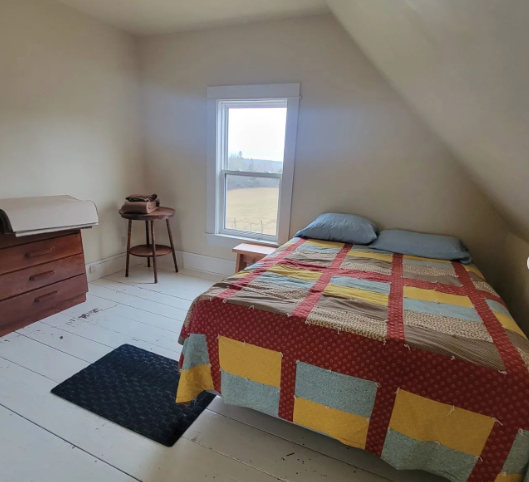
Answer: The house is a 2 story single family home with a kitchen, pantry, bathroom (with shower), dining room, living room and kitchen downstairs. Upstairs are 3 bedrooms (4 beds), a bathroom and an office space.


Question: Is it on Airbnb/Is it an Airbnb?

Answer: Although it is a short-term rental, it's not listed on Airbnb or equivalent online platform. We plan to eventually list it on that type of site but for right now, we'd like to take our time to complete the exterior work, and understand how to make a great short-term rental/farm stay and get great photos. That means for right now, bookings are done through our website and/or through contacting us directly.

Question: Can I tour the farm? Can I see the animals?

Answer: To get a farm tour of the animals, tractors and other farm sights, check with one of us before hand to coordinate a time. We will only offer guided tours because we are a working farm, and need to ensure a safe experience around equipment and animals. We will have a self guided nature trail through the farm and woodlot, and it will be marked with signage to go at your own pace and enjoy nature.

Question: Are pets allowed and why not?

Answer: We get this question a lot! Although we have dogs and are dog-lovers we don't allow pets at the farmhouse for a few reasons. With dogs of our own we know they sometimes have accidents, make messes, and can scratch the floor (most of our wood floors are original to the house and some are painted). The cattle can get spooked by dogs and with some dogs seeing our free range chickens as a lunch snack, we have decided to limit pets coming to the farm both for our events and for the farm stay.

Question: Do you have a hot tub/Do you plan to have a hot tub?

Answer: Although hot tubs are popular for many short-term rentals, we do not offer one or plan to offer one. Since the house is a historical farm home, we feel a hot tub wouldn't fit the rustic charm and character of the space. It may also not be practical or feasible based on the layout of the property. 

Monday, 2 January 2023

Winter Farmhouse Rental for Friends and Family

 As some of you will have already heard, in 2023, we be offering a short-term rental option at the new Farmhouse which is located next door to us on our farm. We will have more details (and dates) to come as we work to finish getting it ready for visitors!


After we finish painting and furnishing the house this winter, and before we pick an online platform to officially launch it, we will be offering a discounted rental rate to friends and family. Our intent with this is to make use of the winter months with people we know and work out a smooth system (for check in, cleaning, instructions/description) and make sure we have it outfitted with everything people need and expect. As fiends and family, we will ask you to provide us with feedback, suggestions or ideas so we can make any adjustments before launching through an online platform and hosting people that we’ve never met before. This offer will be for a couple months only this winter and will require a 2-night minimum at $100 a night (plus tax). The bookings for this special offer will be directly through our website.


These are some current pictures of the house with more features and furniture to be added in the coming weeks. We both have a week of vacation booked from work in mid January and plan to work on the house that whole week. We hope to have the house “ready” by the beginning of February.


If you are interested in a winter stay, think about dates in the winter and early spring that would be of interest to you and watch for more posts on when we’re ready to launch this offer.


Tuesday, 27 December 2022

2022 Farm Wrap Up

I am writing this blog post, almost like how I used to write our Christmas letter in years past. It's been so busy around the farm the last few years, I never seem to have time, but this year I really wanted to take time to reflect on 2022. 

Christina and I have Christmas break off from our office jobs and with the weather being damp and cold, we have used the last few days to catch up on rest and start planning for 2023. 

2022 was one of the biggest years on the farm since we transitioned over from Dad running it. We started off with a short but rough winter, losing power every few weeks and a bad ice storm. Although we enjoy the winter time to slow down and rest, losing power makes it really tough to keep the barn from freezing up and generally makes operations harder. 

We were able to use the winter time to really build a great list of events for the entire year that included seed saving, bouquet making, Forest Bathing, and a herb planting workshop to name a few. Christina really did most of the work on developing the curriculum and supplies for them, where I helped get them up on the website and helped set up the event building. These workshops really brought our vision for the event building to life since we had planned for these in the business plan for the building but COVID really got in the way of that the last few years. 


As summer rolled around, we had an abundance of activity on the farm with haying and firewood season, as well as getting the cattle out to pasture and in July, Christina's dahlia's coming into bloom. The dahlia's were a new addition to the farm and will only expand in 2023, as they were beautiful and very popular! We also had an increase in monarch butterflies on the farm due to the milkweed plant Christina planted around the event building! We can wait to see more next year :)


Haying season, I can safely say now, was the best haying season since we moved back to the farm. I was able to get all the manure on last year, I had it all chain harrowed twice and all the equipment worked (after getting all new gear the last 3 years). We made over 3600 square bales over the home lots and a neighbor's field and over 500 bales of second-cut hay. Having this much hay the last two years, with a smaller herd of 9-10 cattle takes the pressure out of feeding them. It only takes 1500-1700 bales to feed our cattle all year and we make almost 4000 bales, which means, not only do we have lots of hay, but we can sell some as well. 


In August we also had a big surprise! One of our heifers, which we didn't think was pregnant, had a calf in the field, in the middle of a big storm. To say we were shocked, was an understatement and little "Stormy" was a lot of work initially to get connected to its mother (a first-time mother) but after working to keep them together, she finally took the new calf under her wing. This made up for a hard loss we had in April when "Molly" lost her little heifer calf, so we were very thankful.


In October we wrapped up something we had been working on since May, which was purchasing a second property for a future Farm Stay/Airbnb on the farm. This house is right in the middle of the farm and had been owned by the neighbors for 25 years. It was originally a Meister home that was built at the same time as our farm home but was sold off by my grandfather years ago. This will be a huge part of 2023 as we get it ready and list it as a farm stay option on the farm, which we are super excited about! Stay tuned for more details in the new year but below is a picture of where it's located on the farm.


Later in the fall we had a big loss in the family with the passing of my Dad. He was a huge mentor for Christina and me over the last 11 years living here and to say we are able to keep the farm going here because of him is an understatement. Growing up with Dad he taught me everything about working in the woods and on the farm, and it was amplified over the last 11 years when we worked together every day until he couldn't get up to the barn as much and we talked a lot on the phone or in person. In my last conversation with him, the night he passed, he asked about the cattle, Christmas Trees and Christina's wreath workshops. Although I am at peace with his passing as it was in his sleep and painless, he loved the farm and was a sounding board for so much of what we are trying to do now since taking over operations. As he passed close to our u-pick and Christmas tree season in New Ross, he was a presence in all we did during that time and so many people shared stories of him cutting their tree, like my brother or I did this year for them. 


2022 was a year of highs and lows but one of constant reflection. The joy of living on the farm was one I shared with Dad during my visits during the last months of his life, and being able to share all we were doing, with his approval, will forever be in my mind as we move forward into 2023. We are excited for more on-farm events, haying and growing seasons and the upcoming farm stay but all in the shadow of the last 5 generations of Meister's before us. 

Rex - The life of a bull

Growing up on a cattle farm, we saw lots of bulls come and go. Their job was to breed the cattle, and the calves born would be sold as other...